Room by room

Highlights of the Palace.

Five rooms and one gate you should not leave Versailles without seeing — each with the date it was built, the architect who made it, and why it matters.

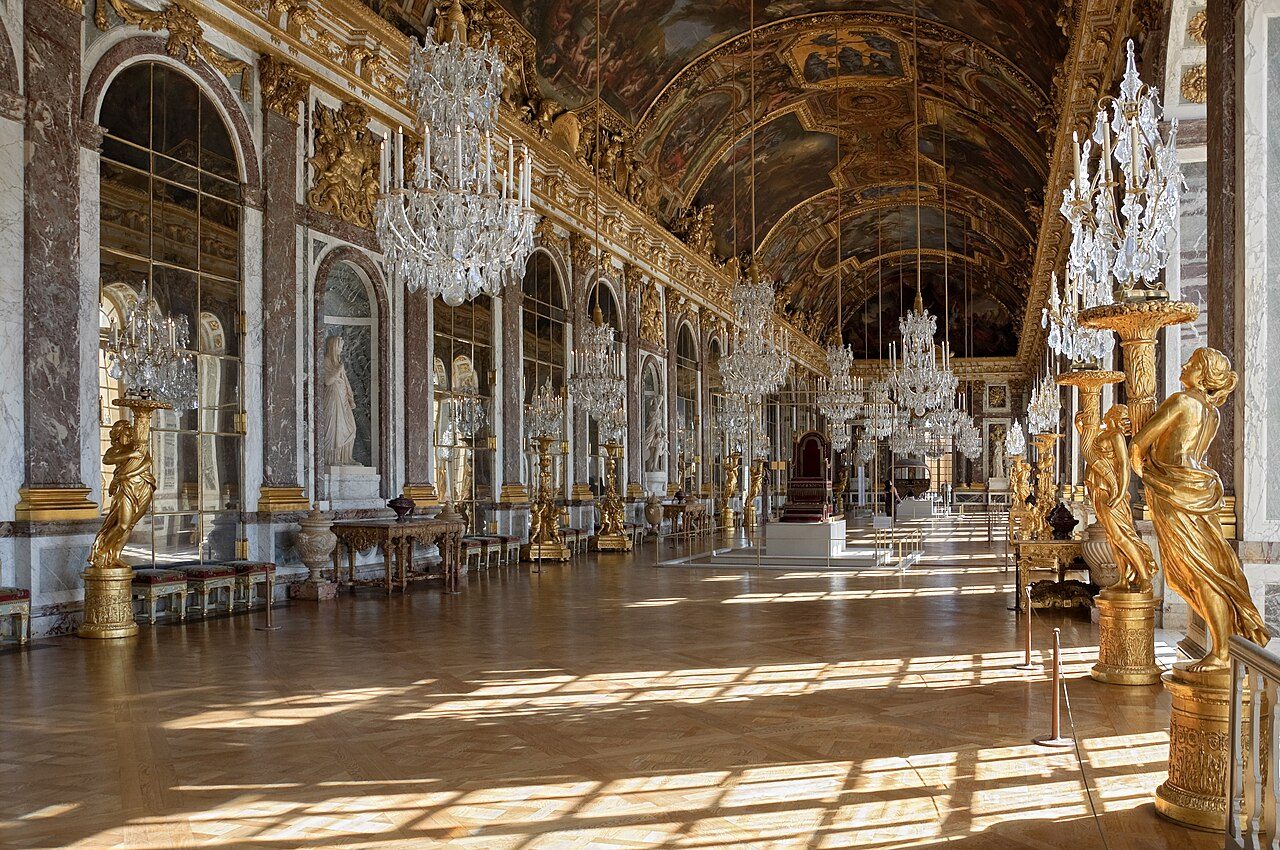
The 73-metre Hall of Mirrors with its 357 mirrored panels reflecting the arched windows
The masterpiece

The Hall of Mirrors

Built 1678–1684

The single most important room in Baroque Europe. Jules Hardouin-Mansart's 73-metre gallery replaced Louis XIV's terrace between the King's and Queen's Apartments in 1678. Its 357 mirrored panels — an extraordinary feat when a single mirror was worth a small fortune — face seventeen arched windows onto the gardens. Charles Le Brun painted the vaulted ceiling with thirty scenes glorifying the personal rule of Louis XIV. The Treaty of Versailles ending the First World War was signed here on 28 June 1919.

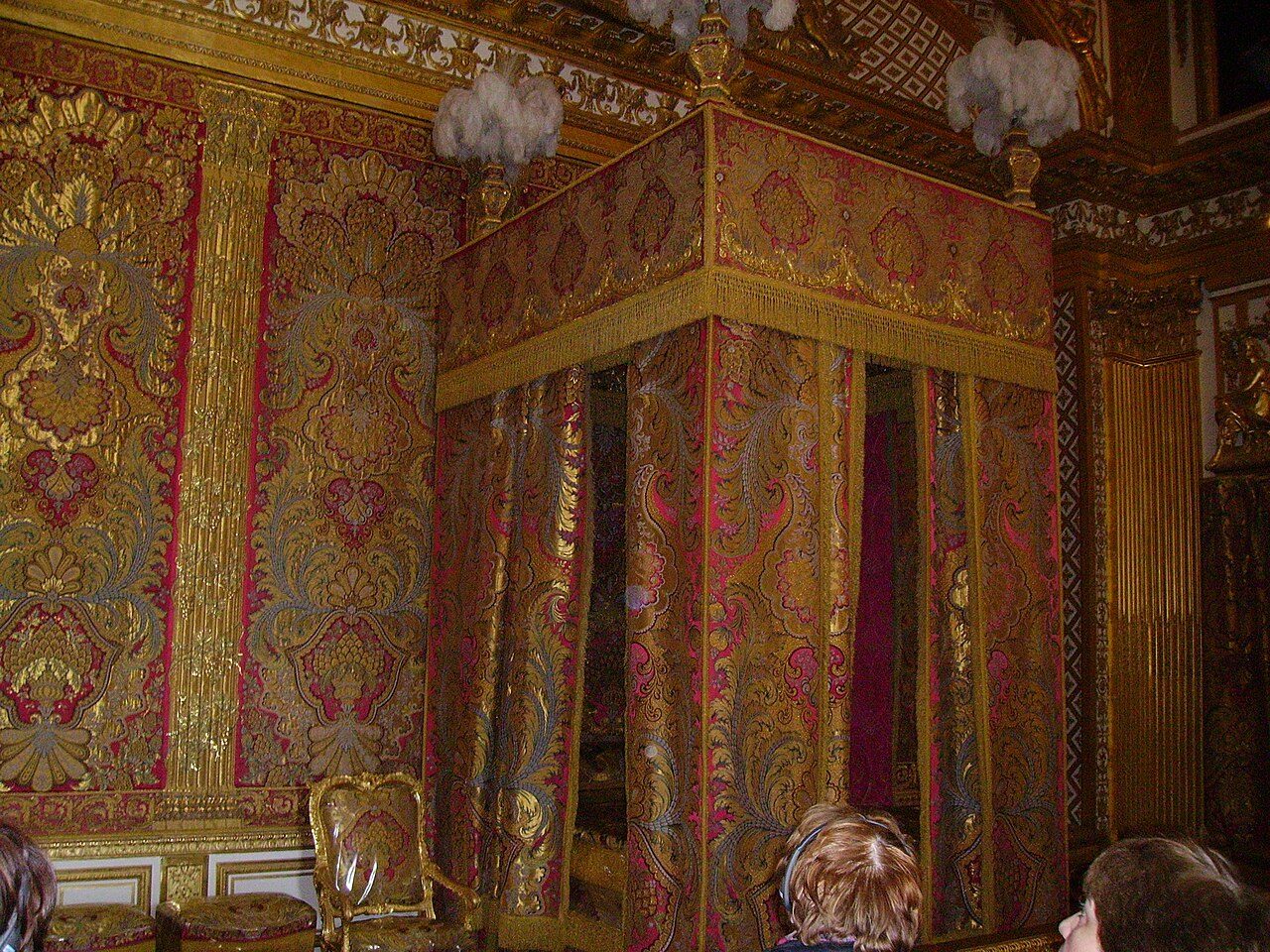
The King's Bedchamber at Versailles, centrepiece of the State Apartments
The state bedroom

The King's Bedchamber

Occupied by Louis XIV from 1701

Placed at the exact centre of the Palace, on the east-west axis that runs from the rising sun to the setting sun, Louis XIV's ceremonial bedchamber was the theatre of two of the court's most rigid daily rituals — the lever (rising) at 08:30 and the coucher (retiring) at 23:00. The room contains the original balustrade separating the King's sacred space from the officers of the bedchamber, and the tapestries and gold embroidery have been progressively restored since 1980.

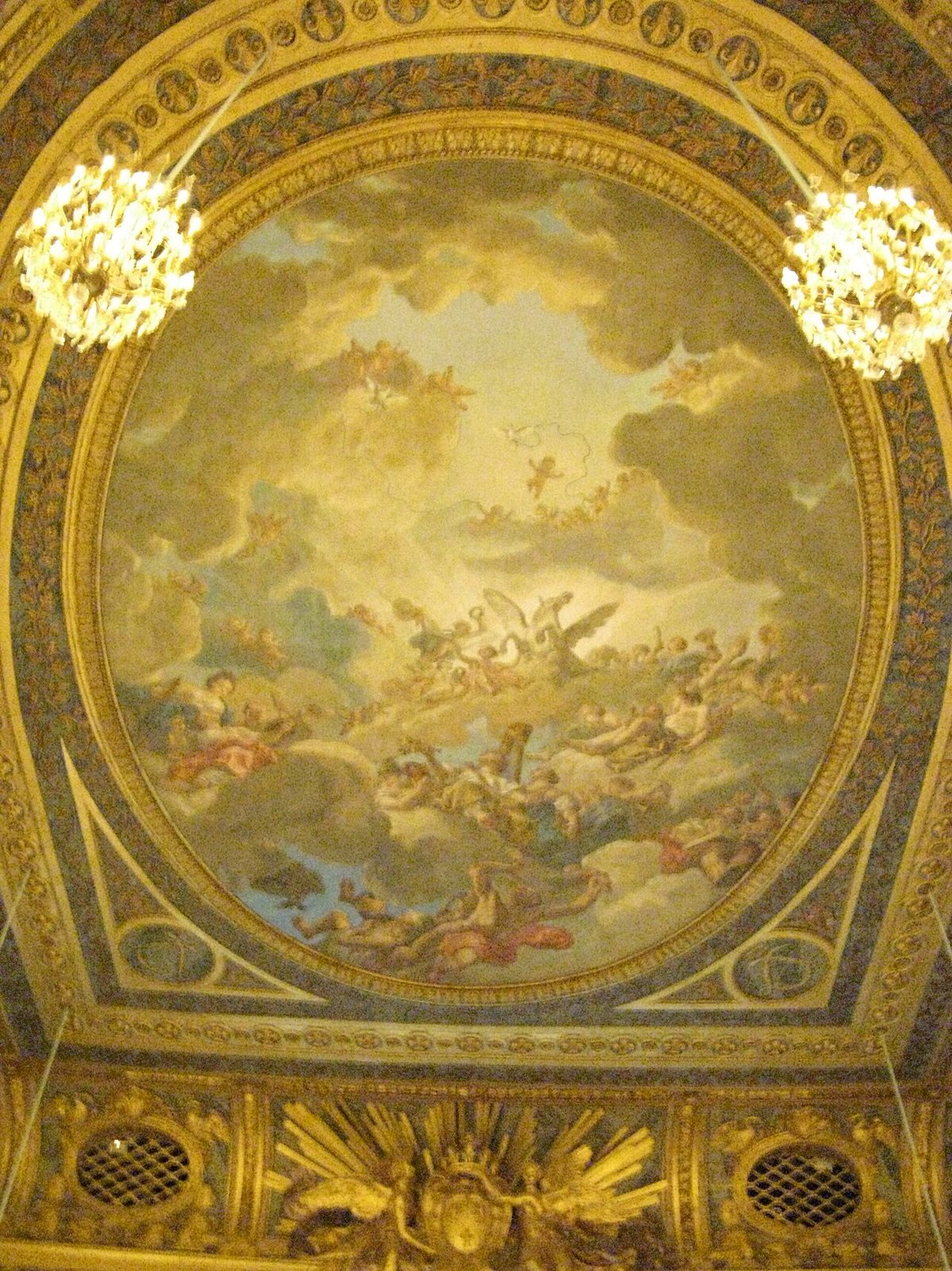
Interior of the Royal Opera House at Versailles, inaugurated in 1770 for the wedding of Louis XVI
The court theatre

The Royal Opera

Inaugurated 16 May 1770

Designed by Ange-Jacques Gabriel over more than twenty years and inaugurated in 1770 for the wedding of the future Louis XVI and Marie-Antoinette, the Royal Opera is one of the finest surviving eighteenth-century court theatres in Europe. It is built almost entirely of wood, painted to imitate marble — chosen for acoustic reasons — and the floor mechanically raises the parterre to stage level for banquets. It seats 700 and remains in regular operatic use.

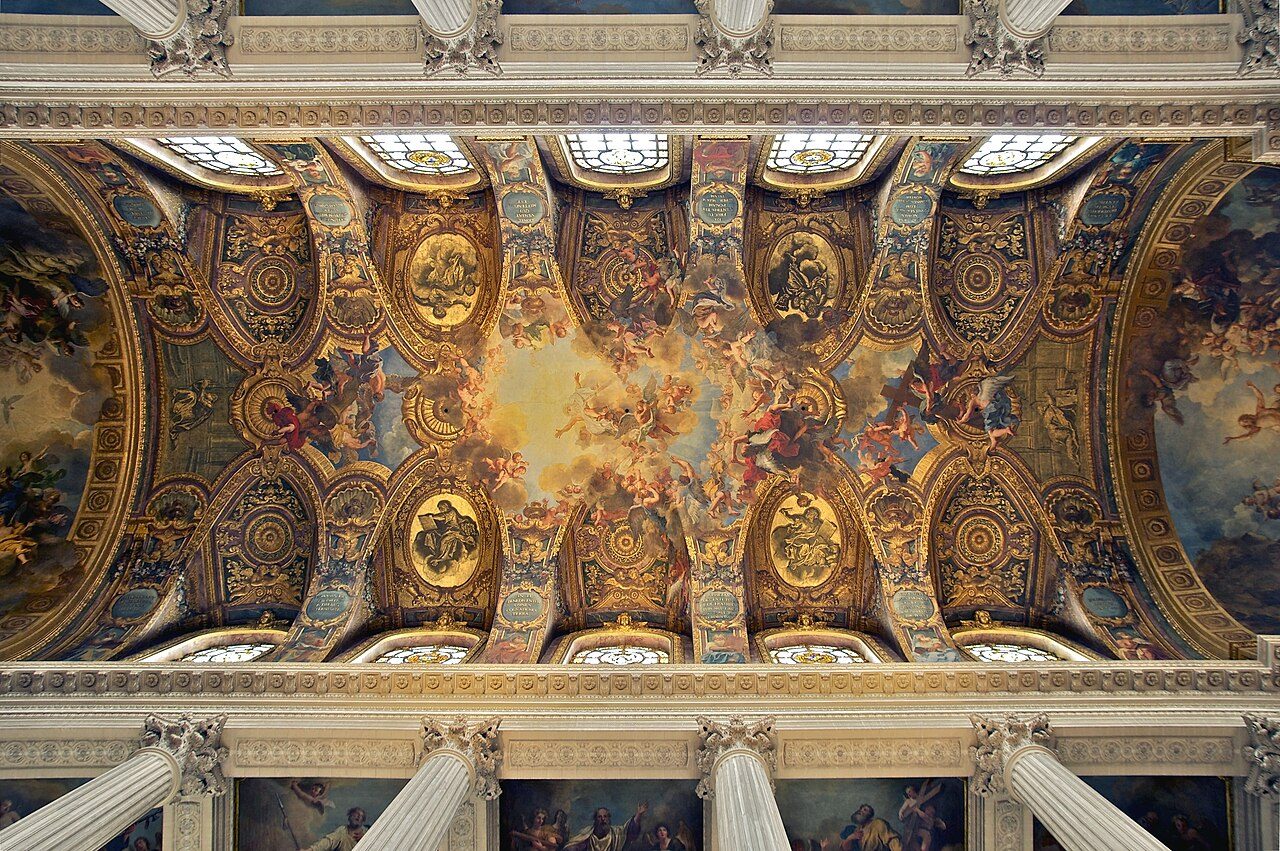
The vaulted ceiling of the Royal Chapel of Versailles painted by Antoine Coypel
The place of worship

The Royal Chapel

Consecrated 5 June 1710

Hardouin-Mansart's final work at Versailles — completed by his brother-in-law Robert de Cotte — the Royal Chapel is a fusion of Gothic verticality (its 25-metre nave rises to a barrel vault) and Baroque ornament. Antoine Coypel's ceiling depicts God the Father in glory; the Louis XIV monogram appears repeatedly in gold and blue. Louis XVI and Marie-Antoinette were married in this chapel in 1770.

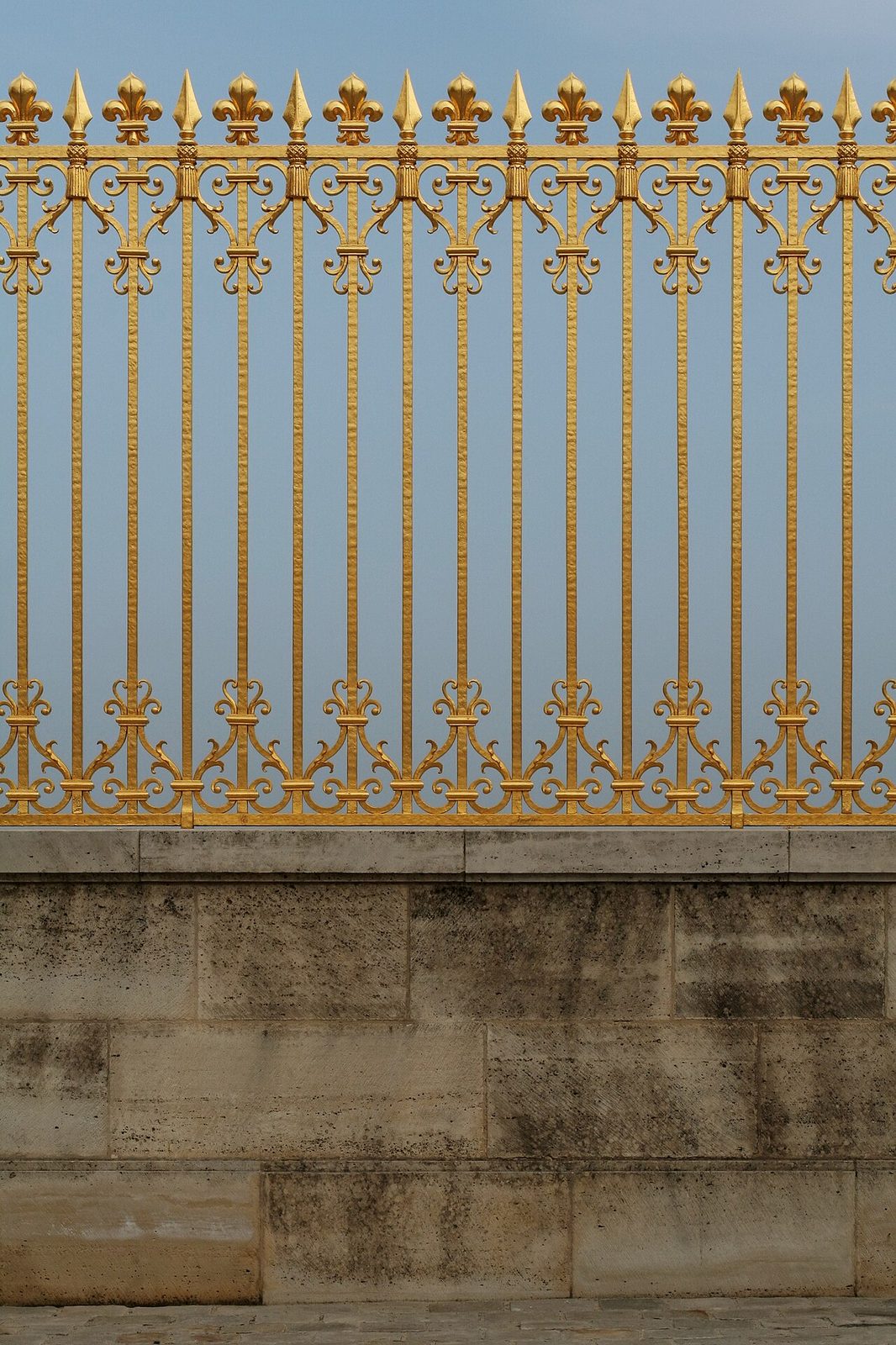
The Royal Gate at the Palace of Versailles, covered in 100,000 leaves of 24-carat gold
The threshold

The Royal Gate

Reconstructed 2008

The Grille Royale marks the boundary between the outer Cour d'Honneur, once open to the public, and the inner Marble Court reserved for the royal family and household. Destroyed in the Revolution, it was reconstructed to its original 1682 design between 2005 and 2008 using more than 100,000 leaves of 24-carat gold. It is the only royal gate of its size and specification in France.

Full circuit

The State Apartments in order.

The one-way visitor circuit through the King's State Apartments, each room named after a Roman deity and dedicated to one of the seven known planets of the seventeenth century:

  1. Salon d'Hercule

    The largest of the state rooms, painted by François Lemoyne between 1733 and 1736 with a single ceiling depicting the apotheosis of Hercules — over 315 figures on a single canvas.

  2. Salon de l'Abondance

    Antechamber to Louis XIV's cabinet of curiosities. The ceiling by René-Antoine Houasse shows Abundance and Liberality.

  3. Salon de Vénus

    The formal entrance to the State Apartments. Cornices and mouldings in polychrome marble; ceiling by Houasse.

  4. Salon de Diane

    Louis XIV's billiard room. Contains Bernini's famous marble bust of the King (1665).

  5. Salon de Mars

    Originally the guardroom, later a music room. Two vast tapestries and Van Loo portraits of Louis XV and Marie Leczinska.

  6. Salon de Mercure

    Louis XIV lay in state here for eight days in 1715, watched by 72 clergymen at all times.

  7. Salon d'Apollon

    The throne room. Beneath a ceiling by Charles de la Fosse showing Apollo in his chariot, Louis XIV received foreign ambassadors on a silver throne (melted down in 1689 to pay for war).

  8. Salon de la Guerre

    'The Salon of War' — a corner room with a bas-relief of Louis XIV on horseback trampling his enemies. Opens directly into the Hall of Mirrors.

  9. Galerie des Glaces

    The Hall of Mirrors itself. Allow at least 15 minutes.

  10. Salon de la Paix

    'The Salon of Peace' — the mirror image of the Salon de la Guerre at the far end of the Gallery.

  11. Queen's Apartments

    Six rooms mirroring the King's, occupied successively by Maria Teresa (Louis XIV's wife), Maria Leszczyńska and Marie-Antoinette.

  12. Hall of Battles

    Added by Louis-Philippe in 1837, a 120-metre gallery displaying 33 monumental paintings of French military victories from Clovis to Napoleon.
Frequently Asked Questions

What is the most famous room in Versailles?
The Hall of Mirrors (Galerie des Glaces) is the most famous room in the Palace of Versailles. Built between 1678 and 1684 by Jules Hardouin-Mansart, the 73-metre gallery contains 357 mirrored panels facing 17 arched windows, and hosted both the 1871 proclamation of the German Empire and the 1919 signing of the Treaty of Versailles.
How many rooms does the Palace of Versailles have?
The Palace has approximately 2,300 rooms across 63,154 square metres of floor space. Of these, about 1,000 are open to the public in some form, and the visitor circuit through the State Apartments takes in around 20 of the most important.
Can you see the King's private apartments?
The King's Private Apartments — where Louis XV and Louis XVI lived in relative privacy behind the ceremonial State Apartments — can only be seen on a paid guided tour (€10 in addition to the Palace ticket). Tours run daily in English and last 90 minutes.